


What is fleet management service? We explain the benefits of implementing it.



Due to labor shortages and the progress of work-style reforms, there is a growing demand for increased efficiency and productivity within limited human resources. In particular, for businesses that own multiple vehicles (fleet), optimizing operational status and cost management become key challenges.
Therefore, "fleet management" is attracting attention as a way to improve the efficiency and productivity of vehicle (fleet) management operations. By properly implementing fleet management, it is possible to achieve efficient vehicle operation, strengthen safety management, and reduce costs, which in turn leads to improved customer satisfaction.
This article provides an overview of "fleet management services," which offer comprehensive support for fleet management, as well as explaining the advantages and disadvantages of implementing them.
GeoTechnologies, Inc., which possesses road network data and map databases, welcomes consultations and inquiries regarding the implementation of fleet management. Please feel free to contact us via the link below.
For inquiries or questions regarding the implementation of fleet management, please contact us here.
- Fleet management refers to the efficient management and operation of vehicles used for business purposes.
- The effectiveness of fleet management services and why they are attracting attention.
- Benefits of implementing fleet management services
- Disadvantages of implementing fleet management services
- Challenges when implementing fleet management services
- • The use of map data is important for fleet management.
Fleet management refers to the efficient management and operation of vehicles used for business purposes.

Fleet management refers to all aspects of managing the vehicles (fleet) used by companies, sole proprietors, organizations, etc.
Although there is no clear definition, fleet management generally includes vehicle inspection and maintenance, as well as vehicle inspection and insurance management, driver training, route optimization, and fuel management. Managing and analyzing information generated as vehicles move is also part of fleet management.
Fleet management is necessary regardless of the number of vehicles owned or how often they are used, and it's not limited to the logistics and transportation industry. It's especially important for organizations that use company cars and sales vehicles as business resources.
Furthermore, utilizing map data is effective for fleet management that enables efficient and safe driving operations. Real-time route optimization and fleet dynamics management can lead to improved operational efficiency, cost reduction, and accident prevention. The benefits of using map data are summarized in the following document. Please refer to it in conjunction with this article.
The effectiveness and reasons why fleet management services are attracting attention
Fleet management services are primarily provided through software and cloud systems. By utilizing GPS technology and digital maps, vehicle operation status can be monitored in real time, and operational data, driver locations, travel routes, maintenance status, fuel consumption, and other information can be visualized and managed efficiently.
The growing interest in fleet management services stems from labor shortages and the advancement of digital transformation (DX). In the logistics industry, where labor shortages are severe due to the "2024 problem" (a limit on drivers' working hours), it is difficult to allocate a large number of personnel to fleet management in the first place. Therefore, it is necessary to reliably perform a wide range of tasks with limited resources.
Therefore, an increasing number of companies are considering introducing fleet management services that can streamline operations using the latest digital technologies.
Furthermore, labor shortages affect not only those in management positions, but also drivers, sales staff, and other personnel who use vehicles. This is because if the workload becomes concentrated on a few individuals, or if certain tasks become dependent on specific people, it can disrupt operational management and vehicle arrangements, potentially leading to a decline in safety and delivery efficiency.
In response to these challenges, many companies are increasingly adopting fleet management services.

Benefits of implementing fleet management services

There are four main benefits that companies can gain by implementing fleet management services. Let's take a closer look at each of them.
This can lead to accident prevention and safe driving.
By implementing fleet management services, you can expect to prevent traffic accidents and support the safe operation of your vehicles.
For example, vehicle management functions allow for monitoring the status of vehicle inspections, maintenance, and repairs, enabling timely maintenance to prevent breakdowns and accidents. Furthermore, monitoring driving behavior allows for appropriate guidance to drivers prone to dangerous driving, thereby preventing accidents.
In addition, features such as notifying drivers of accident-prone areas and optimizing driving routes according to the situation are expected to reduce the physical and mental burden on drivers, leading to safer driving.
Reduces the burden on administrators
Fleet management services significantly reduce the burden on managers by enabling centralized digital management of driving conditions and vehicle status. Manual fleet management involves a wide range of tasks, requiring considerable time and effort for data collection and analysis.
In this respect, by introducing a fleet management service, operational data and maintenance information are automatically collected and analyzed, freeing managers from the time-consuming and laborious task of data aggregation and analysis. Furthermore, because the data is collected and analyzed automatically, the risk of human error can be reduced.
This will reduce costs.
Fleet management services enable real-time acquisition of operational data, leading to increased vehicle utilization efficiency and cost reductions. For example, selecting fuel-efficient routes based on mileage and time data can reduce fuel costs.
Furthermore, accurately understanding the operational status of vehicles allows for the reduction of unused vehicles, thus optimizing the number of vehicles needed.
Can complywith the law.
By implementing a fleet management service and managing vehicle maintenance information, you can keep track of statutory inspections and vehicle inspection schedules, preventing omissions. This will ensure that safety standards are met and that compliance with regulations is achieved.
Furthermore, by monitoring driving behavior, it is possible to provide appropriate guidance to drivers who frequently engage in dangerous driving behavior, thereby reducing the risk of accidents.
Furthermore, features that notify drivers of accident-prone areas and optimize driving routes can reduce the burden on drivers and contribute to safer driving.
Disadvantages of implementing fleet management services
While fleet management services offer many advantages, they also have disadvantages that require careful consideration. Here are two disadvantages you should be aware of before implementing them.
Implementing the service is time-consuming and costly.
Implementing fleet management services involves initial costs for purchasing hardware and software, as well as the time and expense required for training service users. Additionally, time will be needed for users to become familiar with the new operational workflows and system usage.
However, once fleet management services become widespread, it is important to consider their implementation from a long-term perspective, as they can lead to cost reductions, increased efficiency, and improved productivity.
Some people are hesitant to adopt the service.
When implementing fleet management services, some people may be resistant to new systems, so a careful approach is required. The ability to monitor vehicle location, driving status, and travel routes in real time is a major advantage of fleet management services.
However, drivers who are being monitored may feel that they are "not trusted" and "constrained by being watched."
Therefore, it is important to carefully explain in advance how the service can improve operational efficiency and prevent accidents, as well as how it can strengthen the company's compliance with laws and regulations, and to gain their understanding before implementation.
It would also be a good idea to communicate specific benefits, such as reduced overtime and improved work-life balance.
Challenges when implementing fleet management services
While implementing fleet management services offers benefits such as cost reduction, improved operational efficiency, and accident prevention, a lack of personnel to consider, implement, and operate these services remains a challenge for all companies.
Securing personnel with the necessary experience and expertise in fleet management itself can be a barrier to considering and implementing the service.
It is crucial to thoroughly consider whether you can secure the necessary personnel and whether you can manage with existing resources before implementation.
The use of map data is crucial for fleet management.

Effective fleet management, which aims to achieve efficient and safe driving operations, utilizes map data. By combining map data with vehicle location information, route optimization and fleet dynamics can be performed in real time, leading to improved operational efficiency, cost reduction, and accident prevention.
GeoTechnologies, Inc. offers "MapFan DB," a map database providing various information such as road network data, regulatory information, background maps, and spot data, as well as "MapFan API," a cloud service that utilizes high-precision location data to implement functions such as map display, people flow analysis, route search, and address search. If you are considering fleet management, please feel free to contact us.
Inquiries regarding services for corporate clients
For inquiries, please click here.
Related Services
-
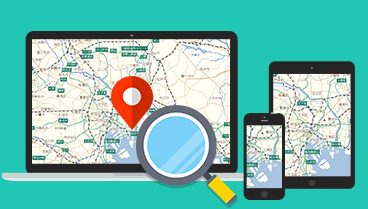
MapFan API
You can use various search functions, such as map functions and route search, on our website and web system.
View service details
-
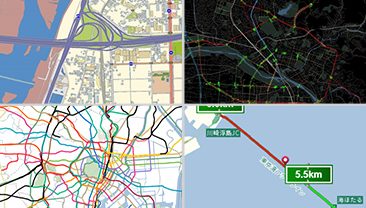
MapFan DB
Our highly reliable and proven digital maps can be widely used in standalone applications, internet-based applications, embedded systems, and more.
View service details


